Wednesday, March 9, 2011

Georgia O'Keeffe

I couldn't possibly do justice to the wonderful vistas, still lifes, and giaganitc flowers of Ms. O'Keeffe's work...but will give you a couple of sites that you might be able to enjoy.  I've been one of her admirers for many years...probably since being smacked in the gut by the first sensuous flower with bold colors in a museum.  I've been glad to have Ms. O'Keeffe's calendar art on my wall many times, to enjoy that "this is what she had to say" on a daily basis.


Yes, she was a painter, not a potter.  Surprise!  The arts do enjoy the other media that are used through our inspirations.  We'll be back with clay soon enough...


 photograph of O'Keeffe by Alfred Stieglitz. New York City, 1918

(b.Nov. 15, 1887, Sun Prairie, Wis.-d.March 6, 1986, Santa Fe, N.M.)
 
Modern art in the 20th Century was a period of a vast creative revolution ...the work of the singularly talented and unconventional painter Georgia O'Keeffe.  In her long career she became renown for her portrayal of a vivid, powerful and private sensibility in natural objects such as flowers, clouds, and most notably animal skulls and bones.  This combined with her use of thin paint and clear colors evoked feelings of mystical silence and put her years ahead of her time.
 
Of Irish and Hungarian ancestry, Georgia O'Keeffe was born on a farm in Sun Prairie, Wis.  She grew up an introspective child who did things her own way and decided early to become a painter because as she once said: "That was the only thing I could do that was nobody else's business."
As a teenager Georgia moved with her family to Williamsburg, Va., where she attended the Chatham Protestant Episcopal Institute, graduating in 1904.  During the next few years she studied at the Art Institute of Chicago and the Art Students League (New York).

in Abiquiu, New Mexico, photographed by Carl Van Vechten, 1950.
 
  She developed her artistic ability by painting still lifes; most successfully the oil on canvas Dead Rabbit With Copper Pot.  Though it won her a scholarship in its medium and was an early indication of her genius, it brought Georgia little personal satisfaction for she felt it differed little from the works of still life painters before her.  Ergo, she resolved to put painting aside for a while.  Briefly she was a freelance commercial artist in Chicago and then found a more pliable career for her art work in that of teaching.  In 1912, she became a teacher of art and supervisor of art for the public schools in Amarillo, Texas and in 1918 she became head of the art department at West Texas State Normal College in Canyon, Tx.
 
In these years Georgia studied the art theories of Arthur Wesley Dow, a lecturer of art at Columbia University.  Dow taught her that pictorial art must create its own two dimensional reality based on pure aesthetic principles and that composition must be abstract and based on line, color, light and dark masses, repetition, and symmetry.  These along with a state of isolation, emotional ferment, and solitude following a conflict with her boyfriend, cemented a theoretical and personal meaning in art for Georgia.  Free of artistic conventions and all their influence, Georgia resumed her painting, experimenting with oils and watercolors, as well as drawing in charcoal.
 
In 1916, Georgia mailed some of her charcoal drawings to a friend in New York City, which would bring her inadvertent artistic immortality.  Ignoring Georgia's wishes, this friend showed the drawings to Alfred Stieglitz, the pioneer photographer, who exclaimed: "Finally, a woman on paper!"  He exhibited them at his famous art gallery "291" on 5th Avenue in New York City, and immediately they drew attention.  Georgia, a reticent person as always, was appalled and went to New York to demand their removal.  However, Stieglitz persuaded her to let them remain and to continue her art work in search of her own personal vision within abstract design.
 
The charcoal designs in this exhibit were of rounded, bud-like forms nestled in between a jagged silhouette and an undulating ripple.  Art critics thought them to be sexual much to Georgia's chagrin, for her main focus was femininity and tenderness.  In 1917, Stieglitz presented a solo exhibition of her work and in the summer of 1918, Georgia relinquished her teaching position and moved to New York City.  Here she became a member of  Stieglitz's circle of painters whom he patronized such as John Marin, Marsden Hartley, Arthur Dove and Charles Sheeler.  Additionally, she became a model for Stieglitz in a series of sensuous photographs in which she posed in the nude.  Moreover, Georgia O'Keeffe and Alfred Steiglitz–though 23 years her senior and married with a daughter–became lovers.
 
The whole decade of the 1920s saw the flourishing of Georgia O'Keeffe's artistic talent.  The most important of her art work from this period is her paintings of flowers, as exemplified in Black Iris III and Red Poppy.  These, as well as others, possessed a certain style that Georgia broke artistic ground with: magnification.  In this Georgia would enlarge the painting subjects to intensify their specific identity, increase their importance, and dramatize their emotional power.  Part of the meaning behind these paintings was to prove nature's equality with industrialization.  Georgia painted her flowers as large and as noticeable as the skyscrapers being built nascent in the cities via the prosperity of the "Roaring Twenties."
 
The vibrating fragility and intimate centrality of Georgia's flowers led some art critics to liken them to female genitalia, consequently they believed Georgia was interpreting the Freudian sexuality rampant in "Roaring Twenties" society.  In truth they saw only half the picture (no pun intended): Georgia used the flowers as a sexual metaphor to arouse enchantment with its beauty.  Other important paintings include: Canna, Red and Orange, Calla Lily in Tall Glass II, White Calla Lily with Red Background, and Petunia II.
 
In 1926, Georgia O'Keeffe began to paint from the industrialization end of the spectrum with images of urban landscapes and skyscrapers which include: City Night; Shelton Hotel, New York #1; and New York Night.  In these Georgia captured the height and distance of the structures in addition to the atmosphere in which they stand: the daylight or nighttime, the sky, the wind, etc.  However, other characteristic urban components such as automobiles, streets, and people were not portrayed.  In fact Georgia O'Keeffe never in her entire career painted people or any living creatures.
 
In 1929, Georgia spent a summer in New Mexico, where she was mesmerized by the dry magical landscape and broad desert skies.  From this she painted what remains one of her most compelling paintings entitled Black Cross, New Mexico.  In this Georgia depicted a somber, intimidating, monolithic black cross, literally devouring the earth and sky behind it.  However, the succulently rippled purple and red hills and the horizon preserver.  This juxtaposing of stern order and riotous passion would be a recurring theme in Georgia's paintings.
 
It was also during this artistically fruitful decade that Georgia would be joined in matrimony to Alfred Stieglitz.  After living together for six years, Stieglitz persuaded Georgia to marry him as soon as his divorce from his wife of thirty-one years was final.  With that the sixty-year-old Alfred Stieglitz and the thirty-seven-year-old Georgia O'Keeffe were married on Dec. 11, 1924.
 
In the 1930s, Georgia O'Keeffe began painting another subject which would enhance her prestige as an artist.  These were animal bones, in particular cow skulls.  Just as with the flowers, Georgia enlarged, centered, and simplified the bones on the barren desert.  Her depiction were of quietude, remoteness, and perseverance along with the beauty of the desert that is so often unrecognized.  In some cases she painted the bones even more enigmatically by adorning them with flowers painted in the same vein as her previous works.  Probably, the most enigmatic from this period is Cow's Skull with Calico Roses (1931).
 
These years would be personally difficult ones for Georgia however.  In 1933 she suffered a nervous breakdown and was hospitalized, curtailing her painting for about a year.  Also, Alfred had begun to be bothered by recurrent heart problems.  Nonetheless, they both continued their work.
Georgia continued to paint animal bones and in the 1940s focused the subject on the pelvis.  Depicting birth and infinity she painted the pelvis suspended in the sky both abstractly and realistically; the sky was painted to appear clear and endless.  An example of this is Pelvis With Moon (1943).
 
On July 13, 1946, Alfred Stieglitz died of a stroke at the age of eighty-two.  He and Georgia had been married twenty-two years.  It would take Georgia three years to settle his estate and her painting became sporadic.  In 1949, she moved to Abiguiu, New Mexico and began painting again, but the emotion seen in her earlier works had faded. During the 1950s she painted a series based on a rectangular wooden door on an adobe wall.  While majestic, these paintings were very formal and less inspiring.
 
In 1959, after a world tour by airplane, Georgia painted the Sky Above Clouds series based on an aerial view.  The most notable painting of which was her largest work, a twenty-four foot mural entitled Sky Above Clouds IV (1965), in which the clouds are painted rhythmically on a placid sky, depicting peace above earth.
 
Despite that her later art work was less potent than her earlier ones, Georgia's retrospective paintings were exhibited at the
Intimate Gallery, An American Place, the Museum of Modern Art, the Whitney Museum, and other places through the 1960s and 1970s,  In 1970, Georgia received a well deserved honor in that of the gold medal for painting of the National Institute of Arts and Letters.  Then in 1977 President Gerald Ford presented her with the Presidential Medal of Freedom.
It was unfortunate that by this time Georgia was losing her eyesight and could not paint unassisted.  Ultimately she was totally blind.

Juan Hamilton, a young potter, appeared at her ranch house in 1973 looking for work. She hired him for a few odd jobs and soon employed him full time. He became her closest confidante, companion, and business manager until her death.

O'Keeffe dabbled in pottery herself, and had a large kiln installed at the ranch for firing pots.


A final triumph for Georgia was in April 1985, when President Ronald Reagan awarded her the National Medal of Arts.  A little less than a year later on March 6, 1986, Georgia O'Keeffe died in Santa Fe at the ripe old age of ninety-eight.  The brilliance of her art work has proven timeless as it continues to intrigue and inspire people.  This phenomena has been maintained in a variety of ways, notably the Georgia O'Keeffe Museum in Santa Fe that opened in 1997


ACCOMPLISHMENTS
  • Elected to the American Academy of Arts and Letters
  • First retrospective show of a woman's art at the Museum of Modern Art
  • Awarded the Gold Medal of Painting by the National Institute of Arts and Letters 
  • Awarded the Medal of Freedom, the nation's highest civilian honor 
  • President Ronald Reagan presented the National Medal of Arts in 1985.
WEBSITES
The Georgia O'Keeffe Museum
Georgia O'Keeffe Gallery
Georgia O'Keeffe - Ellen's place illustrated biography
Georgia O'Keeffe Art Links - links to works viewable on the Web 
 
QUOTE
I get out my work and have a show for myself before I have it publicly. I make up my own mind about it–how good or bad or indifferent it is. After that the critics can write what they please. I have already settled it for myself so flattery and criticism go down the same drain and I am quite free.
- Georgia O'Keeffe
most of the above information is from:
               http://www.lkwdpl.org/wihohio/okee-geox.htm
There are several documentary films, books on her life, and her work is exhibited in most of the large Art Museums in America, which says much more about her life.  (Interested?  Just google her name!)

Tuesday, March 8, 2011

TOSHIKO TAKAEZU

TOSHIKO TAKAEZU, b. 1929

Toshiko Takaezu was born in Hawaii of Japanese decent, and has been working in clay for over forty years. She moved from producing functional vessels to abstract sculptural forms. Over the years she has merged the aesthetics of the East and the West, as well as her love of the natural world.

Throughout her career, Toshiko has focused on the enclosed vessel, which has become a symbol of her work. Her earlier pieces were almost exclusively wheel-thrown, but she began envisioning larger forms. With these forms she incorporated hand-building techniques that allowed her to build larger vessels and stray from the restrictions of the wheel. The  simple structures are united by form but gain individual character through her painterly surface decoration. Toshiko’s spontaneous approach to glazing occurs as she walks around the vessel freely applying glaze through pouring and painting.

Gaea Moon Pots, 1979, 30"-33" d.
Uariramba, 1970.


Toshiko says, “In my life I see no difference between making pots, cooking, and growing vegetables.They are all so related.However there is a need for me to work in clay.It is so gratifying and I get so much joy from it, and it gives me many answers in my life.”


Light,  36" h. 1970 


Toshiko ‘s love of teaching has been a great contribution to the ceramic field. Her passion for clay is infectious, and she has continually shared this enthusiasm. While teaching at Princeton University for 23 years and presenting workshops throughout the world, she always had time for generations of apprentices. Among the many awards she has achieved, her greatest achievements were the Hawaii Living Treasure Award and an honorary doctorate degree from the University of Princeton. She has been an inspiration to many through her work and life’s contributions.


--------------------------------------------

I had to create an equivalent for what I felt about what I was looking at - not copy it. Georgia O'Keeffe

Monday, March 7, 2011

Ursula Goebels-Ellis, a potter of Black Mountain, NC

for more info on Ursula, here's a great sight:

http://www.art.net/studios/sculptors/ursula/

Circular Logic: Using Balloons as Molds for Spherical Handbuilt Ceramic Sculpture

by Ursula Goebels-Ellis

from Ceramics Arts Daily,
May 6, 2009
If you’ve ever wanted to build a round ceramic sculpture, but working on the potter’s wheel is not your cup of tea, the technique presented in today’s post might be the answer. In it, Ursula Goebels-Ellis explains how she uses balloons to create her spherical sculptures.

She also shares a clay body recipe that she tweaked to work perfectly for this technique. - Jennifer Harnetty, editor.

Materials  I work with a clay body modified from a Stephen Kemenyffy recipe: 30 parts Virginia Kyanite (35 mesh); 33 parts Cedar Heights Goldart; 33 parts Frederick Fireclay. Since plasticity is essential in my handbuilding process, I substitute mullite for kyanite and add 1 1/2 to 2 parts paper pulp (dry weight). Toilet paper dissolves most readily into a soft pulp that can be mixed with dry ingredients or wedged into a commercial clay body. After adding the paper pulp, I allow the clay body to mature for a couple of days. I have kept this mixture for almost a year in plastic bags in an airtight container without excessive bacterial growth; however, it does not recycle well.

While traveling, I collect indigenous materials from the depths of the oceans and the rims of volcanoes. At home, I work them into the clay, along with pieces of glass, scraps of metal and machine parts.


ProcessI start each sphere by covering a concave mold with a piece of cloth. The mold can be a cracked bowl or a hemisphere made from plaster or recycled clay. I prefer the latter. The cloth prevents plaster chips from contaminating the clay body and assists in rotating the sphere without disturbing the surface; it also is useful in carrying the finished form to a place where it can be stored, glazed or fired.

A flattened piece of clay - the thickness varies from 1/2 to 3/4 inch, depending on the size of the sphere- is cut into a round shape for the base. Slabs are then attached to the base to build the sides. During the forming process, the edges are kept soft by covering them with small strips of plastic.

I use a fork to score the edges, apply slip and press the overlapping clay against the wall of the mold.


For improved bonding, I use additional coils and always work the clay in the same direction (figure 1). When the walls reach higher than the mold, I insert a balloon for support (figure 2).

Super-sized balloons can be ordered online or through party or flower stores. For extra strength, it is sometimes helpful to insert one balloon into the other and inflate them only to two-thirds of their maximum size. With care, they can be reused several times.


Once the basic form is complete (figure 3), the drying process needs to be closely monitored. It is important to let air out of the balloon periodically to give the clay room to shrink. If the air pressure is too high, the drying clay cracks as it shrinks; if the balloon deflates too quickly, the whole structure could collapse.


While the clay is still leather hard, I paddle the sphere with the balloon inside to strengthen joints, or to alter shape and create additional texture. If one has not been left in the forming process, an opening big enough to insert a hand is carved out at this point. I remove the balloon and continue to work inside and out on form and texture, often adding found pieces of granite, glass and/or metal.

Special attention needs to be paid to how, when and where to incorporate such materials, because they dry, mature or melt at different rates and temperatures than the clay body. For example, to include a larger piece of rock or metal, I work like a jeweler putting a diamond into a setting of gold (shrinking clay). Volcanic rock keeps its form when raku fired but becomes a stream of lava in the much hotter anagama wood firing. Some metals run at mid-range temperatures, while heavier pieces of steel survive stoneware temperatures. Rocks can explode, while beautiful seashells dissolve into powder.

Once structure and design are completed, the opening is (partially) closed to form a small neck. The clay is then allowed to dry completely before firing.

This post was excerpted from Ceramic Art: Innovative Techniques, available in the Ceramic Arts Daily Bookstore. The full article includes information on how Ursula finishes these pieces by wood or raku firing them.

======================================


I feel there is something unexplored about woman that only a woman can explore. Georgia O'Keeffe

Saturday, March 5, 2011

Maria Martinez

I decided that if I could paint that flower in a huge scale, you could not ignore its beauty. Georgia O'Keeffe
___________________________


MARIA MARTINEZ, 1887-1980


"As we move forward in the discussion of women’s role in the ceramic field,
we recognize the legacy of Maria Martinez, who revitalized the lost art form
of Native American pottery making. Her work, born from an ancient tradition, exhibits the life of a people that once populated most of our country. Today, Maria and other Native American potter's work can be seen in museums worldwide.


Maria was schooled only to the fourth grade. She was born in the San Ildefonso Pueblo, a Tewa-speaking community on the eastern bank of the Río Grande about 20 miles northwest of Santa Fe. Archaeologists believe that this village existed at that location since the 1300’s and was populated by descendants of those who once inhabited the canyons and cliffs of the Pajarito Plateau.


"In 1880, a Smithsonian Institution collecting expedition headed by James Stevenson visited San Ildefonso, but Stevenson found very little pottery. He noticed that these people were spending most of their time in subsistence farming and almost totally abandoned the manufacture of pottery making. San Ildefonso had become increasingly depopulated since the arrival of the Spanish and then again when the United States government took over. By 1900, only 138 people lived in the pueblo.


"Tin and enamel pots and pails replaced the pueblo’s ceramic tradition of finely painted black-on-cream ware. A cultural revival would soon be sparked by Martinez’s deep love for clay.


"Maria’s husband Julian gathered, hauled, and purified her clay before she began mixing it. By 1919, Maria began producing the black-on-black pottery that would make her world-famous. Although black ware had been found at archaeological sites, the firing method that produced it had been lost. The couple began experiments to recreate the polychrome ware that was the most common form of pottery found on the plateau. They revived a unique Tewa way of firing at zero oxidation that had gone out of existence. At a certain point in the firing they smothered the pot with cow dung and let it bake and smoke for several hours.


"Maria demonstrated pottery making at the St. Louis World's Fair in 1904, where she sold her pots for 50 cents or a dollar. Today, her pots garner more than a quarter of a million dollars at auction. Maria also demonstrated her pottery making at the San Diego World's Fair in 1915. She received the Best of Show at the Century of Progress; Chicago World's Fair in 1933 and was invited to the White House by President Theodore Roosevelt. In 1939 she made her pottery at the San Francisco World's Fair. Her work was included in two European tours between 1955 and 1961. 
from Jayne Shatz


-------------
Feather bowl, $6900
MORE...
"San Ildefonso Pueblo is a quiet community located 20 miles northwest of Santa Fe, New Mexico. Inhabited since A.D. 1300, the pueblo saw many changes that resulted in a rich culture, in which today ancient traditions mix with Spanish festivals and Anglo conveniences.
Maria Antonia Montoya was probably born in the year 1887 and died in 1980.

"All her life she lived in the pueblo and eagerly shared with visitors and her neighbors and family her passion in being a potter.

"Excavations of 1908 and 1909, led by Dr. Edgar Lee Hewett (who was also the director of the Museum of New Mexico), produced examples of many pre-historic pottery techniques. Dr. Hewett asked Maria to replicate these pieces in the same polychrome form they had been found.

"It was then that Maria and her husband, Julian (who painted the designs on the pottery after Maria shaped them), began an artistic collaboration that would last throughout their lives together.

"Maria and Julian refined their pottery techniques and were asked to demonstrate their craft at several expositions, including the 1904 St. Louis World's Fair, the 1914 Panama-California Exposition in San Diego, and the 1934 Chicago World's fair. Part of their success came from their innovations in the style of black-on-black ware

"The process for the creation of this ware begins with a batch of clay that is mixed and has set for a few days, a "pancake" of clay is formed and pressed into a puki, beginning the process of building a pot. The puki is a bowl-shaped form that supports the bottom of the pot as it is being built. Most commonly, pots are formed with a coil technique, in which long snake-shaped coils are circled around the base of the pot and blended together to create the walls of the vessel. A potter's wheel is not used in traditional pueblo pottery making. When the height and the amount of clay are just right, the walls of the pot are smoothed and shaped into curves with pieces of gourd, called kajepes.

"The pot is left to partially dry after the form is completed. In its semi-dried state, the pot is ready to be scraped, which refines the shape and removes any irregularity. Then the pot is sanded with sandpaper to rid it of any grit. The red slip is applied next, and the pot must be burnished with a stone before the slip dries completely. This step is most critical for the glossy nature of the black wares.

Maria Martinez Bowl


"A decoration is painted onto the polished surface, resulting in matte areas once the piece is fired.

"Traditionally the men of the pueblo do the painting, but women were taught the process and painted during the times that the men had left the pueblo for work. Julian replicated and was inspired by many pre-historic designs. He was fond of many motifs, using ancient symbols in new combinations. He often painted the avanyu, the horned water serpent, which he saw as a symbol for the rush of water after a hard rain, and as a metaphor for the pueblo itself.


"Black wares become so in the firing process. This labor-intensive task is done after many pots have been made, to maximize efficiency. Wood and dried cow manure are piled around an iron grill, upon which the pottery has been carefully stacked. The pile is lit and left to burn for a specified amount of time, until the fire has reached its maximum heat. At this time the fire is smothered with ash or fresh manure, producing a smoke-filled reducing atmosphere that turns the pots black. Variations in the process can produce pottery with black areas and red areas, which are also popular.
Maria Martinez Plate


"For many years, Maria and Julian produced their pottery together amid raising a family and carrying out traditional duties for the pueblo. Their children were taught the importance of the craft, and they participated in various ways. After Julian's death in 1943, Maria began working with her daughter-in-law Santana. Santana provided the painted decoration that was her father-in-law's legacy. After 1956, Maria also worked with her son Popovi Da. It was Popovi who helped market her work, built a shop at the pueblo, and spoke about the pottery tradition of San Ildefonso at lectures across the country.

"One of the family's most innovative potters is Maria's grandson Tony Da. Tony combined sculptural techniques with traditional forms to create unique forms. Due to a motorcycle accident, Tony no longer makes pottery, but he continues to work as a painter. Many other family members and people from San Ildefonso continue to make pottery, carrying on the tradition so openly shared by Maria.

"Although you may see similar styles of the black on black pottery in pueblo art, remember the true artist who reintroduced it in modern times- Maria Martinez .

by Eileen Richardson

Primitive pottery vs industry

"There are places throughout the world, such as this community in Funjoho, Africa, that still employ primitive techniques to create their work.

Remember that in art, "primitive" doesn't have to do with lack of intelligence or skill, but simply is a term people "who spend a lot of time in classrooms" use to describe people "who spend a lot of time in nature."   In the case of Grandma Moses, she was considered a Primitive artist, a person who didn't have her education through  classrooms but rather through her own experiences.


African pottery...


A woman making pottery in Funjoho, Africa


A pit fired pot by Colleen O'Sullivan in New York, America, 2007.

Jayne Shatz shares...
"WE NEED TO UNDERSTAND THAT SEVERAL CENTURIES ELAPSED in which women were not making a substantial amount of pottery; men took over traditional pottery manufacturing and turned it into an industry. This is just a fraction of time in the total history of ceramic production. Ancient women potters produced great work from 27,000 BPE until about 1500 BPE. That constitutes 25,000 years of clay production. Viewed in this light, the period between 1500 BPE to 1800 PE (Present Era), represents 3000 years out of a total of 25,000 years that women have been working in clay. By the late 1800’s, women re-emerged onto the ceramic scene, working in art potteries, schools, private studios and industry. Their enduring presence ascended into the ceramic oeuvre once more!

Primitive pottery was a continuing practice among Indigenous peoples throughout the world.  Today (2011) if you "google" primitive pottery, you will find quite a few classes that teach all over the United States how to make this style..."primitive pottery."


Friday, March 4, 2011

Çatalhöyük, (now in Turkey)

Was there really a time when women were in charge of civilization?  Çatalhöyük may have been one of those times, (around 6000 years ago) or as Sid Reger taught in a recent workshop, all of the Neolithic may have been, as Marija Gimbutus proposed!  http://www.goddessmandala.com/links.html


Catal Huyuk, 6000 BCE, copy


THE FERTILITY GODDESS, CATAL HUYUK, TURKEY, 6000 BPE
"This fertility figurine, like the Dolni Vestonice Venus, (see previous post on Neolithic Women Sculptors) was sculpted in earthenware clay and It displays the large breasts, hips and thighs that represent fertility. This ubiquitous sculpture depicted the ancient and primitive worlds’ feminine attributes of fertility and the survival of the species. .... It should be noted that Catal Huyuk developed into one of the largest ceramic centers in the Mid East, making the availability of clay and firing equipment easily obtainable. The importance of ritualistic ceremonies was still a part of the life cycle of this very stable agrarian society.


Jayne Shatz (who states that all neolithic pottery and sculpture was formed by women artists) also says, 'the potter’s wheel was invented around 6000 BPE, and within a thousand years, it was widely used. By the conclusion of the Neolithic period, 1500-1000 BPE, most of the ceramic work evolved into businesses, overseen by men.


Goddess seated with 2 lions

another source (Wikepedia, wherever it may have obtained its information) says...
"Vivid murals and figurines are found throughout the settlement, on interior and exterior walls. Distinctive clay figurines of women, notably the Seated Woman of Çatalhöyük (illustration, right, from Museum), have been found in the upper levels of the site. Although no identifiable temples have been found, the graves, murals, and figurines suggest that the people of Çatalhöyük had a religion which was rich in symbols. Rooms with concentrations of these items may have been shrines or public meeting areas.


What Wikepedia neglects to mention, is that this small figure was found in a grain bin.  This suggests it had been hidden, perhaps to keep it safe.  From what, I wonder...


EVE (Equal Visibility Everywhere) has a great picture of the layout of Catalhoyuk here...(as well as some great book suggestions for Women's History Month)
http://equalvisibilityeverywhere.org/blog/womens-history-month-introduction/

Enjoy Women's History Month.  Let me know what you've learned elsewhere by sending me a comment!  Of course you already have this link, don't you?
http://www.nwhp.org/
The National Women's History Project.

Energy balancing

Just wanted to give a big hurrah for the Women's Spirituality Group of The UU church here in Swannanoa Valley...which met last night to learn about Anchi crystals and Feng Shui and Soul Readings.  It is a great gathering place for lots of interests, but this is the first time I'd heard of some of this in quite this way!

We women sat in a circle, passed around ancient crystals, each of which had different kinds of energies.  Kelly spoke of Akashic records and being in balance.  Ramya spoke of energies of the earth.  Lisa told how she's travelled the world sharing these ancient crystals with everyone she meets.  I'd say she is their ambasador, though she didn't say that.  But she told us to experience what the crystals were telling us through their energies.

We shared a sense of a small group of women who are able to boost each other up on a psychic level.  Many groups of women have been doing this from ancient times.  I found out that some of my friends attend another group that meets at the same time and has been for years, doing much the same thing for each other, but with a different focus.

Just wanted to post a thanks to all the women who gather together to spend minutes (or sometimes the luxury of hours) to reaffirm what we know.  Our roots are deep in mother earth, our spirits reflect the stars, and our arms embrace in shared hugs.  Yes, this is Love.


Thursday, March 3, 2011

Neolithic women sculptors

I will cut and paste some of Jayne Shatz' theories regarding the neolithic cultures.  Enjoy going back in time to when women sculpted in clay, and female figures were carved in stone and bone.  We really don't know why...but obviously they were important enough to be everywhere!


Vestonice, Venus Figurine
       27,000 BPE, 9 " h

Jayne Shatz writes: "... during ancient times it was women who worked the clay. Our story begins during the prehistoric Ice Age around 27,000 BPE, (Before the Present Era) in a small section of land in what is now known as Czechoslovakia. In this frozen tundra there existed a green oasis, void of ice. A clan lived there "...that produced kiln fired ceramic sculptures that we now call the Venus Figurines. Her kiln had an underground flue that was fueled by bones; this firing technique created the rich black carbon surface on the beautiful six-inch forms. To imagine a woman firing a kiln almost thirty thousand years ago is a phenomenal concept to grasp!

"Women have always been capable of producing high quality ceramic work; many cultures existed where women solely produced elegantly coiled pottery while men took care of the homestead. The North and South American Indians and the Neolithic Middle Eastern cultures provide much evidence to this distinction of roles. In these societies, women were the pot makers, creating utensils for the home life. Their job was essential to the sustenance of their families, clans and homesteads. Pottery was used for eating, cooking and the storing of foodstuffs. For many societies, ceramic ware was also a source of trade and income. The Neolithic cultures, 10,000-2,000 BPE, elevated this agrarian system into a complex way of living. In the midst of this utilitarian focus, our ancient potters exhibited a spectacular imagination and creative sensibility that produced artfully decorated ware equal to our modern day artists. With the invention of the potter’s wheel around 6000 BPE, men began to take over the production of pottery..." 


DOLNI VESTONICE VENUS (shown above)
27,000 BPE
"The Upper Paleolithic, or Ice Age ..."The uncovering of the Dolni Vestonice Venus from the cave site in Czechoslovakia is of special interest to ceramists. In that ice free corridor of Czechoslovakia a grouping of three huts was discovered in close proximity to one another, dating from 27,000 BPE. Inside each hut were hearths ringed with flat stones, made from a shallow depression in the flooring. The two larger huts had five hearths each and it is believed that they were the communal dwellings of a hunting clan. In particular, the smallest hut with similar flooring was entirely enclosed in a wall of limestone and clay.  This hut’s hearth provided a spectacular discovery in ceramic history.  A prehistoric kiln in the shape of a "beehive" was surrounded by thousands of clay pellets, attesting to a ceramic modeler’s work.  Along with these pellets were found fragments of the heads of two bears and a fox and some unfinished statuettes. Some archaeologists believe this 30,000-year-old kiln to be the oldest kiln ever to be discovered.

Wednesday, March 2, 2011

Art is Fabulous, women artists!

Maureen Joyce sculpture, 2010


Dervish Woman by Barbara Rogers, 2010


Art is fabulous; one of the most rewarding endeavors a human being can pursue. But (and this is huge), you burn with it. Art consumes the artist deliciously, but it is a harsh discipline in terms of time and concentration. To create it spectacularly a person needs to eat, sleep and breathe art - which means a lot of other things must be neglected (temporarily or totally) by default.


 A female artist can concentrate on art or take care of other people, but it's nearly impossible to do both at the same time. Please trust me here, and never again wonder why Grandma Moses came so late to art.


So how can we rectify this?
We can't do anything about the past. My advice to you, today, is:


  • Create art.
  • Support women artists. Women who are alive and struggling, not the long-gone ones we hold up as examples.
  • Help each other. Strength in numbers, Ladies.
  • Make the right choices for you. If you burn to create art, it's OK not to raise a family. If you want to raise a family and make art, marry wisely, learn how to be really patient and surround yourselves with like-minded friends who'll co-op with you occasionally.
Source:
Where Are All the Famous Women Artists? An Open Letter to Younger Sisters
By , for About.com


Tuesday, March 1, 2011

Women's History Month

You already know I'm a fan of women potters...so be prepared for more to be showcased here.  I started talking about Karen Karnes having an exhibit in the museum in Asheville...and here's a bit more info about her. 

Another woman will be featured each day of March, or till I run out of them...unlikely!


KAREN KARNES, b. 1925


Karen Karnes was a dominant force in the beginning of the crafts movement during the early 1950's. She has influenced generations of potters and is widely recognized as a ceramic educator, although she never taught through traditional college programs.

Karen's parents were Jewish immigrant garment workers from Russia and Poland, and raised their daughter in a housing project in Bronx, NY.  She studied at Brooklyn College's Art Department where she developed artistically, leaning towards the proponents of the Bauhaus. Karen did not work with clay until she married David Weinrib. He brought clay home for her and thus changed the direction of her life. Karen soon began earning her living as a studio potter.

Karen was a Potter in Residence, teaching at Black Mountain College.  She then taught at the Penland School of Crafts and Haystack. She left teaching in the 1960’s, becoming an influential participant in Stony Point, N.Y., an artist community founded on communal living and art production. It was there that she lived and worked for 25 years, establishing herself as one of the leading ceramists in America


A great tragedy occurred for Karen when a fire destroyed her house and studio in l998. From the love of potters all over country, financial support flowed in which enabled her to rebuild her life and studio. She has worked in clay for over 60 years, and continues to produce beautiful artwork in her Vermont studio. Her work is in major collections throughout the world.

Sunday, February 27, 2011

Council of 13 Indigenous Grandmothers

Do you know about these women?  Have you seen the film "For the Next Seven Generations?"

 here's their mission statement...

"We, the International Council of 13 Indigenous Grandmothers, represent a global alliance of prayer, education and healing for our Mother Earth, all her inhabitants, all the children, and for the next seven generations to come. We are deeply concerned with the unprecedented destruction of our Mother Earth and the destruction of indigenous ways of life. We believe the teachings of our ancestors will light the way through an uncertain future. We look to further our vision through the realization of projects that protect our diverse cultures: lands, medicines, language and ceremonial ways of prayer and through projects that educate and nurture our children."

http://www.grandmotherscouncil.org/

Do see the film (and fall in love with them and their mission) ...elder women are powerful forces worldwide!
here's the film's trailer...

http://www.forthenext7generations.com/trailer.php

OK, back to sculpting clay!

I like Patrick Johnson's work...here...

http://www.abstractfigurativesculpture.com/html/turtle-2.html

www.eckerd.edu/academics/visualarts 800-456-9009
EC@NCECA
Eckerd College Ceramics
Works by Alumni, Faculty, and Faculty Emeriti
MARCH 6 - APRIL 8, 2011
RECEPTION
NCECA shuttle from the historic St. Pete train station
Thursday, March 31, 6:30-9:30 pm
The New Cobb Gallery at Eckerd College
4200 54th Avenue South, St. Petersburg, Florida 33711
Conference Exhibition hours: March 29 - April 2, 10:30-4:30
Joy Brown
Bede Clarke
Susan DeMay
John Eckert
Robert Hodgell
Stanton Hunter
Tom Judge
Jan Kimball
Alix Knipe
Mary Law
Jere Lykins
Melinda Marino
Devin McDonald
Casey McDonough
Ian Meares
Brian Ransom
Tai Rogers
Scott Ross
Matt Schiemann
Nick Schwartz
Annette Sidner
Jessica Wilson
Adam Yungbluth
Brian Ransom, Tai Rogers ’01, Alix Knipe ’00,
Bede Clarke ’83, Robert Hodgell

FB problems and Black Madonas

In case you also have not been hearing from some of your FB friends, who might have be de-selected without your knowledge!  FaceBook selects who you get to hear from, on your own pages.  I changed my setting as suggested in this article.


http://www.disruptiveconversations.com/2011/02/how-facebook-now-removes-friends-and-pages-from-your-newsfeed-and-how-to-fix-it.html#comment-6a00d8341bfc6e53ef014e5f425516970c


-----
I found a lovely blog which I'll start following,

http://thequeenofheaven.wordpress.com/2011/01/30/black-is-beautiful-a-black-madonna-gallery/#comments

which is where I got Black Madona information and pictures throughout Europe...thanks Carisa.  The pictures are wonderful!  Mary speaks to many of us as a goddess.


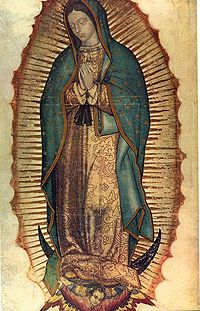
The Virgin of Guadaupe is my favorite, perhaps because the symbolism includes some of the Indigenous Peoples symbols.  (see Wikepedia for details)

I love the internet way of sharing information.  Many many goddess postings in all kinds of places.

And pottery too!  I'll try to get back to that soon.  But these blogs tend to be all about who we are...totally.  At least the ones I enjoy are.  Thanks everyone for being ...er, divine!

Saturday, February 26, 2011

The Divine Feminine

a trailer for a movie on Aphrodite on Cyprus

http://www.youtube.com/watch?v=fY3urLXuZvk&feature=player_embedded

I hope the movie has been made.